
Is Off-Road Racing Possible Without Horns?


Hello friends. In this piece I would like to talk about three big problems in our off-road sport: stage width, horn use and driver changes.
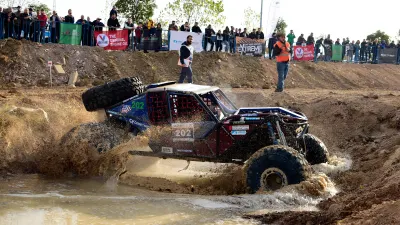
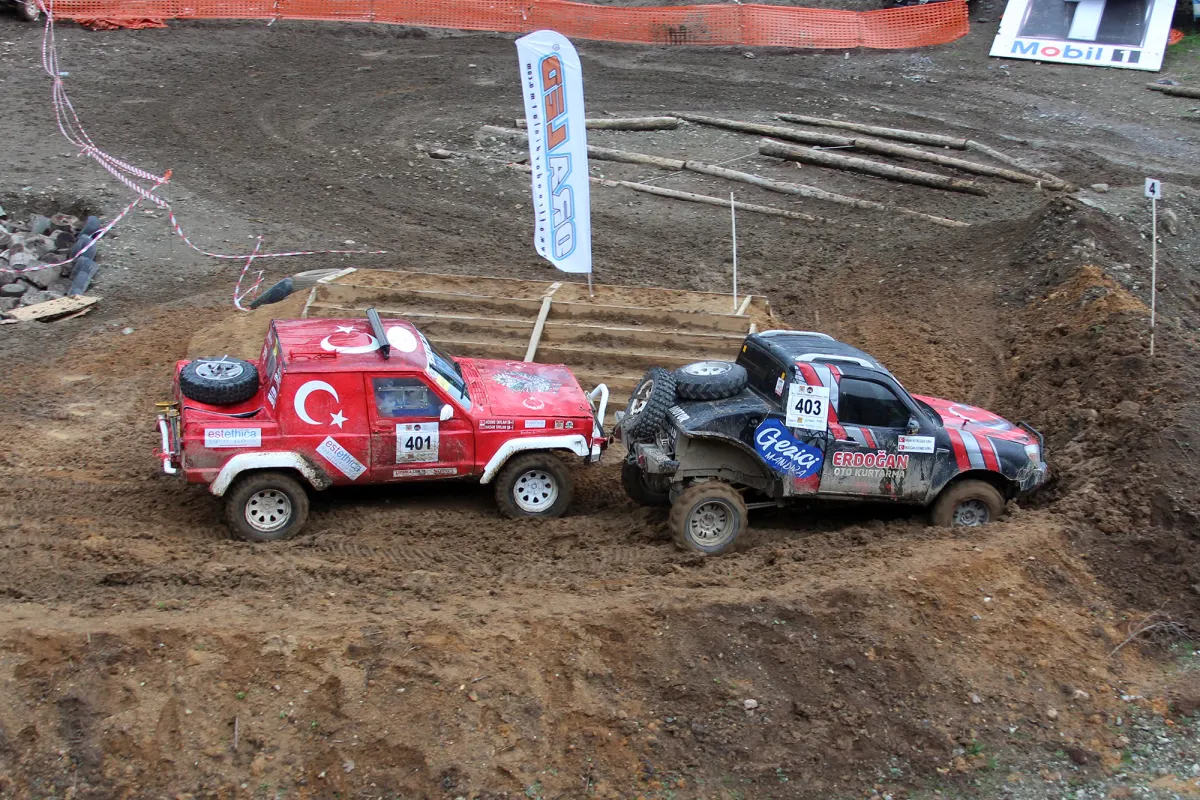
Let's start with stage width. It is not a significant problem on forest stages, but it causes major trouble on spectator stages with gates, where the track is too narrow for two vehicles to pass side by side. Of the vehicles starting at intervals, two or three end up on the track at the same time. All of them are racing against the clock and are intent on getting through every gate as quickly as possible. When one vehicle breaks down or crashes, the track locks up instantly. In that case the vehicle behind is redirected to the next gate. Anyone who watched the first two races, especially the Düzce race, will have noticed how often this happened. And if there is a crash as well, getting the vehicle off the track becomes very difficult.
Now let's move on to the second problem: the horn. Because off-road races generally use areas that are open to traffic, the vehicles must comply with traffic rules. In other words, all of them must have a working horn. There is no question of abolishing the horn. Yet the horn problem has persisted without interruption for many years. Our rulebook contains no restriction on horn use. So those who want to can use it as much as they like. In other words, it is not against the rules. Drivers who start pressing the horn right from the start try to pass their rivals with it throughout the entire stage, on tracks that are already narrow. Some use the horn where it is warranted, while others overdo it, using it for psychological pressure or to excite the spectators. But in the end the issue comes down to the fact that, in normal conditions, there are very few places on narrow tracks where the vehicle ahead can be passed. When a driver leaning on the horn to get past a slower vehicle ahead cannot make progress, the option of shoving it aside is resorted to.
There are two very important points here. The first is that there is no obligation to give way in off-road racing. Nobody benefits from stopping and losing time to let the vehicle behind through. In other words, everyone is trying to set the best time within their own means. The driver behind has to keep looking for an opportunity and pass the one ahead at a suitable place. In the current situation, however, those coming from behind race bumper to bumper, refusing to take their hand off the horn in the hope of being given way.
If you recall how tense we get in everyday life when we hear a horn sounding behind us, you can understand the discomfort it creates.
The first step towards a solution is for the TOSFED officials who approve races not to sanction spectator stages that do not allow two vehicles to pass side by side, and to steer the organising clubs on this matter. The second step is for the directors to warn drivers about horn use at pre-race briefings and to tell them that penalties will be given in cases of malicious use.
In the Turkish Off-road Championship and some of our other off-road races, the problem of freedom to swap drivers and co-drivers also continues. Looking at our rulebook again, it is striking that in off-road both the driver and the co-driver are called "driver", and that no article prevents changes between drivers during a race. If you ask where the problem lies, let me say right away: the driver and co-driver are scored separately. That means a driver can race with a different co-driver in every race, or vice versa, and score points from every race entered.
Let me summarise the situation like this. I, Mehmet, with no off-road racing background at all, could register as a competitor, have my co-driver Volkan Işık drive my vehicle all season, and collect the trophies of the races he wins at the end of each race or at the end of the season as if I had won them. I could even be declared Champion on the strength of Volkan's driving. Doesn't that sound absurd to you too?
Of course, motorsport is also a sport of rules, and those who use the rules well reach victory. The situation I describe is not against the rulebook; in other words, it is legal and seems to be a right granted to competitors. As things stand, nothing can be said to those who use this right.
TOSFED's decision-makers urgently need to take action on this long-running problem, which is causing unease in the paddock. Perhaps a limit could be introduced allowing changes of up to 20% of the total special stage distance for the driver and co-driver. Or the separate scoring for driver and co-driver could be dropped and points awarded only to the competitor. All that matters is that a fair racing environment can be created…
Mehmet EREL