
The Real National Team


The most important moment of the not especially brilliant Galatasaray – Fenerbahçe match played on Saturday, 28 September, was Fenerbahçe's German player Max Kruse singing our national anthem, the İstiklal Marşı. With plenty of Turkish footballers not even knowing the words of the national anthem, for a professional sportsperson to learn the anthem of the country in which they work, and to sing it in the biggest derby of all, was an extremely clever and fine gesture for an "industry" like football that appeals to fanatical emotions.
But while our illustrious "sports" press was busy with Kruse singing the İstiklal Marşı, just a few hours earlier the same day two young Turks were making history by having our national anthem played to everyone there and to the press in France and Spain!
Ayhancan, Bam Bam Bam
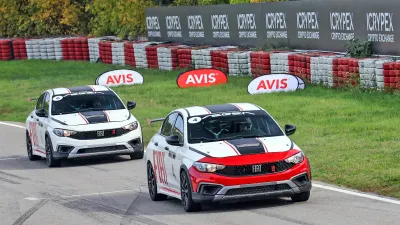
Ayhancan Güven, born in 1998 and supported since the time of Serkan Yazıcı's presidency at TOSFED, is currently achieving incredible success on the global stage. In esports, which a certain age group still hasn't grasped, Ayhancan had made a name for themselves worldwide even before Cem Bölükbaşı. Although a rookie in the Porsche Carrera Cup, currently run as an F1 support series, Ayhancan leads the championship not just in the rookie category but overall. During races all the commentators talk about this driver more than anyone. In France, among almost entirely French drivers, Ayhancan was fast enough to break the class record at the country's most important circuit, which they were visiting for the first time and had only practised on at home in a simulator. We have become so used to seeing Ayhancan on the podium that we are not even satisfied with a finish anywhere in the top three. So these are not proud defeats in the "we lost but we weren't crushed" spirit of football, but victories arriving bam bam bam.
Tek Teker Toprak
While Ayhancan had our national anthem played in Spain, Toprak Razgatlıoğlu, born in 1996, was having it played in France on the same day. It was not just a race win; Toprak made history in WSBK. In winning the 800th race in the championship's history, Toprak was not only the first Turk to do so, but also broke the record of Fabrizio Pirovano, who came from 14th on the grid to win at Le Mans in 1988, by winning from 16th. After the first race win, a video showing Toprak's emotional moments was shared on the official MotoGP website. Toprak was probably sharing the victory with the late father, known and loved in the paddock as "Tek Teker Arif"…
This season Toprak is racing for Kenan Sofuoğlu's former team, Kawasaki Puccetti, with a huge red "Turkish" written on the green bike. Kenan is directly involved with Toprak, as well as with Deniz and Can Öncü and his nephew Bahattin. He is in the paddock at almost every race. Deniz and Can are spending a learning season on the road to MotoGP in the KTM team, in the midst of fierce competition. The record Can broke in the first race win last year will not be beaten for many years.
Of course, our sportspeople are not only competing against their rivals. Those who follow closely know that Ayhancan has been handed rather unfair penalties during races. Toprak was taken all the way to Japan by the team as a team rider for the 24-hour race, then brought back without being put on the bike even once. Our sportspeople compete psychologically in areas away from the track too.
Motorsport Culture
So how did these youngsters emerge? Names don't matter, but they emerged entirely thanks to people who have dedicated their lives to this work. There is no system in the country that raises these youngsters. In a country that talks about horses, women and guns, and is so fond of the automobile, there is almost no motorsport culture. So why this shortfall, despite a facility worth roughly 300 million, built with this nation's money almost 15 years ago for F1 racing?
Motorsport culture began to take root locally in Europe and America when airfields built after the Second World War were turned into local race tracks. Thanks to developed automotive industries, people could easily own domestically produced racing cars, and this culture formed much more readily in Western civilisation. When the cultural values of a society that experienced a renaissance hundreds of years ago combine with a developed industry, motorsport culture emerges. Considering how lacking we are in both respects, it is not very hard to analyse our current situation.
The World Turns on 3F
Salazar, who ruled Portugal as a dictator for 41 years, gave world political history the 3F formula with "Fado (music), Fatima (religion), Football", which he used to govern the people. Since political scientists and journalists have written enough about the first two, I only want to say something about the football leg.
Even the players in our country's national football team are not raised in this country's youth system. For years the national team of a country of 80-odd million has been relying on Turkish-named players raised by Europeans. And this despite football being a billion-dollar sector that can be played in the street with four stones for goalposts and a plastic ball from the corner shop, and is talked about for hours every day.
While Kenan Sofuoğlu of Sakarya, who won the world title five times in a 16-year active sporting career and founded the "Turkish National Team" to let the youngsters who step onto the world stage race and not leave them without backing, has been struggling for years to finish the track in his own city, a 120 million lira football stadium is being built for Sakaryaspor, who play in the second division and wouldn't use it even 20 days a year. By profession and in my current active role, I am one of the few people in the country who know the subject of motorsport facilities well. With the 120 million lira spent on that stadium, a motorsport complex could certainly be built in every region of this country.
Motorsport complexes don't only operate on race weekends. During the week they host traffic and driving training for schools and for private and public institutions. Thanks to karting, every citizen can get to know motorsport and satisfy a sense of speed. In a country where traffic accidents cost more lives than terrorism, building these facilities should be a far more important and urgent task than building any football stadium.
What should be done?
Last year, through a campaign joined by some celebrities, 50 million lira was collected from citizens to "reduce" the debt of a football club. To speak plainly for myself, our state gives this giant business called football far more support than it deserves, through tax advantages and even amnesties. Yet if international success were the criterion for this support and encouragement, motorsport would be receiving the support it deserves while million-dollar footballers would be playing on astroturf pitches.
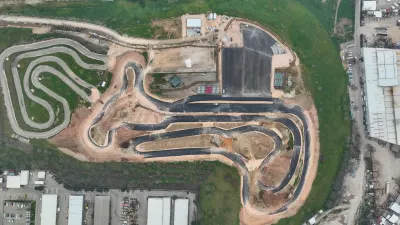
By this support I should not be taken to mean new giant facilities and championships like F1 coming to them. If we have the 25-30 million dollars (1.5 times the cost of the Sakaryaspor stadium I criticised) that we would pay an American organiser for a motorsport event like a single week of F1, we should use it for local motorsport complexes of at most 3 to 3.5 km in length. As elsewhere in the world, these facilities are built outside cities, where land costs are low.
The number of licensed competitors is also directly linked to facilities. That a country this large, with an F1 circuit its federations cannot use for a national championship, has produced such globally successful sportspeople from two local 2 km tracks, at İzmit Körfez and İzmir Pınarbaşı, is nothing short of a miracle. TMF is currently using the asphalt area of the facility built for the MXGP in Afyon and the track in Uşak built through the efforts of Mümtaz Pak.
The drag strip in Antalya, realised after years, came to life through TOSFED. TOSFED is currently preparing regulations for local authorities or private operators who want to set up motorsport infrastructure. Despite a serious loss of land, the İzmir track opens this week with a far more technical layout of five left and five right corners instead of its old plan of six lefts and one right. For three years TOSFED has been running the "TOSFED Is Looking for a Star" project with Fiat. TMF has run single-make cups for young riders with both Yamaha and CF Moto. But these are definitely not enough.
For this sport to spread across the country, for our current successful sportspeople to become better known and serve as role models for young people, for the number of licensed competitors and clubs to grow and their quality to improve, and for new champions to emerge, the officials and leading figures of the relevant motorsport federations should as soon as possible draw up preliminary facility projects for seven regions under a joint action plan, and get moving.
These facilities are not only for sport: in the region where each is located, they are places where young people can practise sport safely on tracks instead of in traffic and receive training, and where the local automotive industry can earn income and make an economic contribution to its surroundings. A football stadium has extremely high maintenance costs and is actively used for very little of the year. Apart from the street vendors around it, it makes no contribution to the local economy. Because spectators don't travel in from out of town and stay overnight for a 90-minute match. Yet during a rally organised in an Anatolian city, you can't find an empty hotel room there.
Strength comes from unity, and now is the time to come together to spread the global success of this sport across the country…