
New Rules for Off-Road and Trial

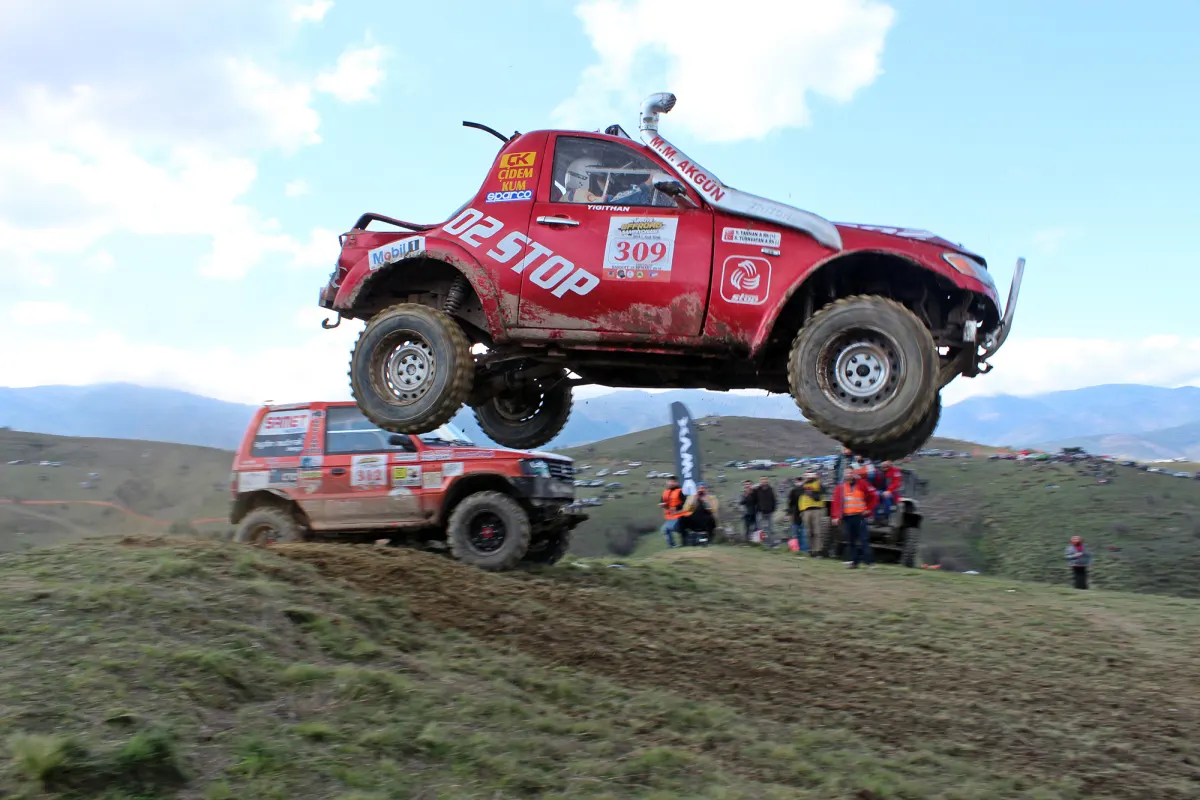

Over the past year or two, a lack of clarity in the off-road rules led to a string of protests and disputes. This had begun to wear down competitors, organisers and officials alike. It was from this starting point that TOSFED kicked off the 2016 season with a number of rule changes. For the new season the rules have been simplified and clarified, and repetitions across different articles have been removed.
If you ask whether the new rules are a cure for every ill, there are of course still shortcomings. But even as they stand, they will certainly reduce the disputes significantly in the 2016 season.
One of the most important things for anyone competing in motorsport is knowing the rules very well. Federations and organisers work on the basis that all competitors know all the rules, and run the system accordingly. In other words, saying "I didn't know this rule" counts for nothing when it comes to the rights you lose or the penalties that are applied.
In this article I will share the main rule changes for the 2016 National Off-Road Championship and the 2016 National Trial Championship. However, our dear competitors who will take part in the events must read the 2016 Rulebook in detail, so as not to lose at the table what they have won on the stages.
National Off-Road Championship
The final day for submitting the entry form for events has been changed from "Wednesday" to "Thursday". The wording "Entry applications made after this date cannot be accepted by the organiser" has been added.
This year classes are decided after scrutineering. If the number of vehicles that have passed scrutineering in the same class and will start is fewer than two, competitors can, of their own accord, apply to the Stewards to move up to the next class before the time the final start list is published. It is now scrutineering, not the competitor, that assigns the class.
The earlier wording "In cases of necessity, a vehicle inside the parc fermé may only be pushed by officials" has been changed to "may only be pushed by the vehicle's driver and co-driver."
The article "Repairs to the vehicle in the parc fermé, under the supervision of scrutineering officials, will be carried out by the driver and co-driver only" has been supplemented with the wording "Inside the parc fermé, competitors may not intervene with any materials they can obtain from outside other than those already on their own vehicle, nor take on board and fabricate auxiliary materials."
Under the new rules, a competitor cannot be more than 15 minutes late to the start TC. Otherwise they are not given a normal start and are restarted with Super Off-Road on the next stage.
For multiple starts, wording has been added stating that competitors who did not take part in qualifying or did not record a time will line up at the back in order of their door numbers. Failing to do so has also been made grounds for exclusion from the event.
Whereas drivers previously had to wear seatbelts while vehicles were moving, helmets must now be worn as well.
This year the aim is to keep as many vehicles as possible in the race and to let competitors complete more stages. For this reason, the 10-minute penalty added to the time of the next special stage entered after using Super Off-Road has been reduced to 5 minutes. If a competitor uses Super Off-Road on later stages, the 10-minute penalty previously applied to each newly entered stage has been abolished.
Previously a competitor had to reach the parc fermé under their own means to be classified as a finisher; this year they will be considered to have finished the race once they reach the stop point of the final stage. They will therefore not have to go to the trouble of pushing the vehicle. A crew that has not started the final stage of the event will be excluded from the event and will not score points from it.
There will be no parc fermé at the end of the event. Instead, all vehicles will be inspected by scrutineering at the stop point.
Last year, competitors who had not taken the first start of the event could not benefit from Super Off-Road. They now have that right.
In the new season, if the time card cannot be presented at the stage's time control points (lost, torn), the competitor is excluded from that stage only. In this case they can, if they wish, continue on the next stage with Super Off-Road.
During a stage, work on the vehicle (repairs) may only be carried out by the driver and co-driver using only materials carried inside the vehicle (spare parts, tools, solid and liquid materials, equipment). Any outside help or materials are forbidden. This year, direct exclusion from the event has been added for crews who breach this rule.
To reduce crowding in the service areas and make them more orderly, service personnel are now required to wear lanyard passes.
Before the start, crews could be up to 15 minutes late to the parc fermé entrance, with a fine of 10 TL for each minute of lateness. Crews that are more than 15 minutes late are now excluded from the event.
The trophies of drivers who cannot attend the prize-giving ceremony for a valid reason will not be handed to others on the podium. These awards will be delivered, away from the podium, to someone nominated by the competitor. Otherwise, competitors' awards will be sent by the organising club to the address given on the entry form. For a breach of this article, and for a driver who fails to attend the prize-giving without an excuse, a penalty deemed appropriate by the Sporting Directorate will be applied if it is noted in the TOSFED Observer's report.
Competitors and drivers are banned from making statements unrelated to the event during the prize-giving ceremony.
National Trial Championship
For gates, which cannot be narrower than 4 metres, a maximum width limit of 8 metres has been introduced.
Both competitors of a team will be started at the same time, from a standstill. Other teams cannot be started until the stage has been cleared. Teams may also start in reverse. Vehicle A or B may start first, but they cannot start side by side. Each vehicle must start under its own power.
For a vehicle to complete a gate, both of its axles must have crossed the imaginary line formed by the gate posts. A competitor who stops inside the gate or short of it will be considered not to have completed, that is, not to have passed, the gate.
The distance between a team's vehicles (counted in gates passed through and completed) has been reduced from 2 gates to 1 gate. The distance between them can no longer be more than 1 gate. Otherwise the stage will be considered over for the team. However, when there is 1 gate (passed through and completed) between the vehicles, the team's vehicles may help each other. The gate to which vehicles can reverse or go forward to help each other may be the one immediately before or after the last gate they passed through with both axles in accordance with the rules.
At stage finishes, the team's drivers will leave the stage with all equipment in place and with the driver's and co-driver's seatbelts fastened, stopping and placing both hands on the windscreen to signal to the marshal that they have finished. A vehicle that passes the stop point without placing both hands on the windscreen to signal to the marshal that it has finished will be given the stage's ideal time.
The much-debated fixed point article has also been detailed. Fixed points must not move at all. If a vehicle (construction machine, tractor, 4x4 etc.) is used as a fixed point, that vehicle must not be moved from its position for a second task.
The statement that pallets and spare wheels cannot be used to pass an obstacle or gate has been made more explicit.
Crews with the same total time in the overall classification will share the position in the end-of-event classification. In this case, the next position cannot be given to another crew.
These are the changes that caught my attention. I thank our dear Öcal Zilanlı, who did not withhold his support while this article was being prepared.
You can access the National Off-Road Championship and National Trial Championship Rulebooks at the links below…
For the 2016 National Off-Road Championship Rulebook CLICK HERE
For the 2016 National Trial Championship Rulebook CLICK HERE
Mehmet EREL