
Arısoy: "Drift Is the Control of Uncontrollability"

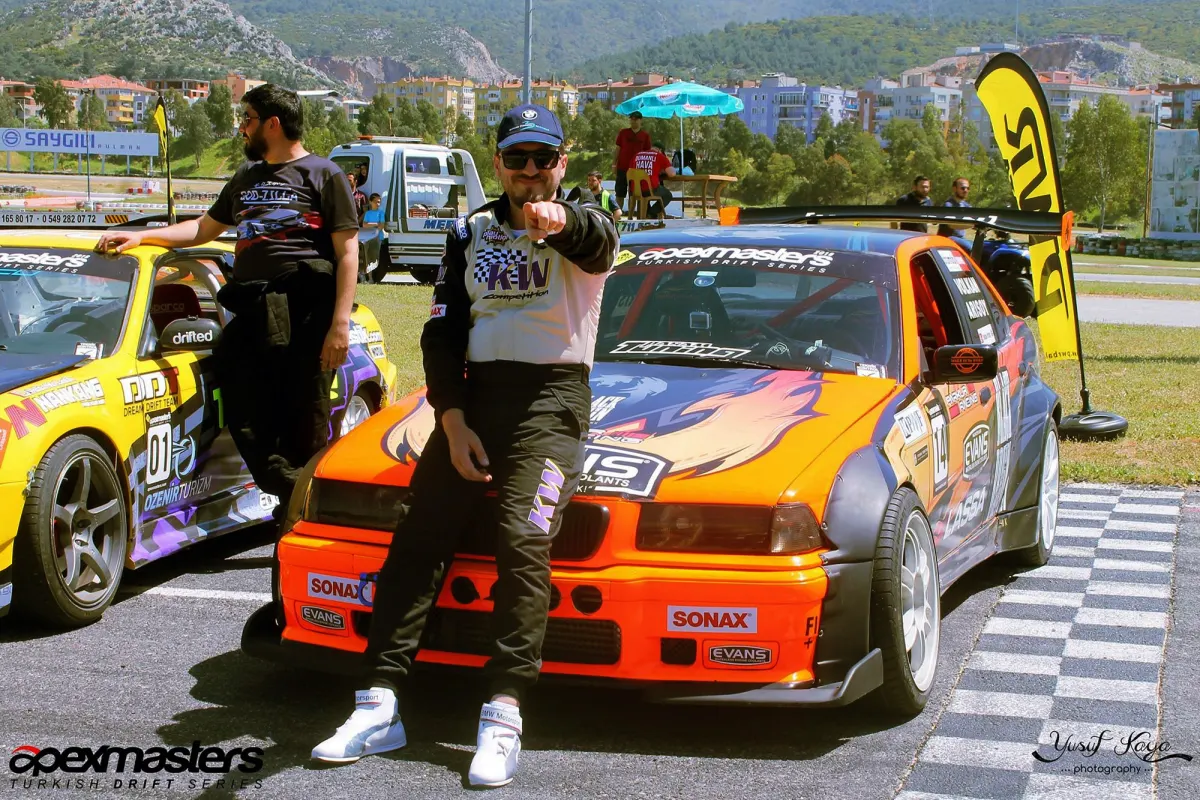

Drifting, a sport that is spreading rapidly around the world and has a very large audience, has begun to make a name for itself in Turkey too, thanks to the support of TOSFED and the determination of the drivers devoted to the sport. We spoke to Volkan Arısoy, one of the pioneers of the sport and an active driver in the Apex Masters Turkish Drift Championship, to take a closer look at drifting.
Türk Motorspor: Could you introduce yourself?
Volkan Arısoy: Of course, with pleasure. My name is Volkan Arısoy. I was born in Istanbul in 1975, and I'm married with a son. I run the Turkish representation of several German companies through V&A Danışmanlık Hizmetleri, a company I own. Alongside that, I work as Editor-in-Chief at Automag magazine, I'm a DJ and, of course, a drift driver.
T.M.: You have a very colourful life. Isn't it difficult to juggle so many things, especially with a family life too?
V.A.: It would be a lie to say it isn't. Of course, living a life like this comes with its own difficulties. Just think: with one phone call you're a company boss, with the next you're a member of the press, with another you're a DJ. On top of that you're a husband and a father. And I mustn't forget being a drift driver! Doing all of it together may be quite an achievement, but it's possible if you know exactly what you're doing, are good at your job and, of course, work systematically so you can run everything at the same time. If you programme yourself properly, you use your time well. Using your time well is the most important rule. Naturally, the support of your family is essential too. If your partner or those close to you don't support you and show some flexibility, it becomes really hard to run all of this together.
 T.M.: Those words seem like they will shed light on anyone who wants a life like yours but doesn't know how to achieve it.
V.A.: If I can help a few people in that way, I'll be happy. Everyone has their own key to success, as you know. Mine is working systematically but very hard, and using time to the fullest. The rest comes by itself.
T.M.: Let's get to the main point, and to the side of you that matters most to us: your drifting. First of all, could you tell our readers a little about drifting? What is drifting? How is it done? What should the car be like?
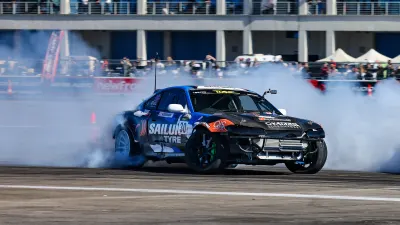
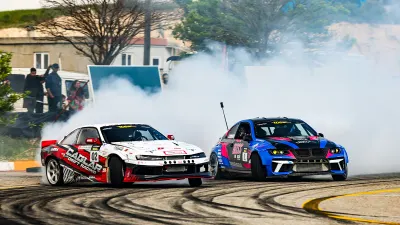
V.A.: "The control of uncontrollability" is actually the best definition one can give for drifting. It's the sport for those who don't want to live a monotonous life and want to add a bit of excitement and a bit of the extraordinary. It's perhaps the only sport where the symphony created by horsepower, tyre and exhaust noise, and smoke merges with the cheering of the crowd. Drifting is the dance of cars. It's no different from a hip-hop dance where stylish movements keep pace with the symphony of engine and exhaust, and where the tempo and adrenaline are always at their peak. The essence of drifting is first to put the car into an uncontrolled state, then to bring that uncontrolled state back under control in quick succession, and to keep that state of uncontrollability going without ever stopping.
T.M.: That sounds quite difficult?
V.A.: Yes. From the outside you see a car going sideways and it looks simple. But in reality it demands multi-faceted control skills. Believe me, even getting your brain used to this kind of command and accepting it takes time. When you drive a car, your brain is used to reacting immediately to correct mistakes. Teaching it not to give that reaction takes time too.
 T.M.: How did drifting come about, and how did it reach our country? Could you tell us a little about that?
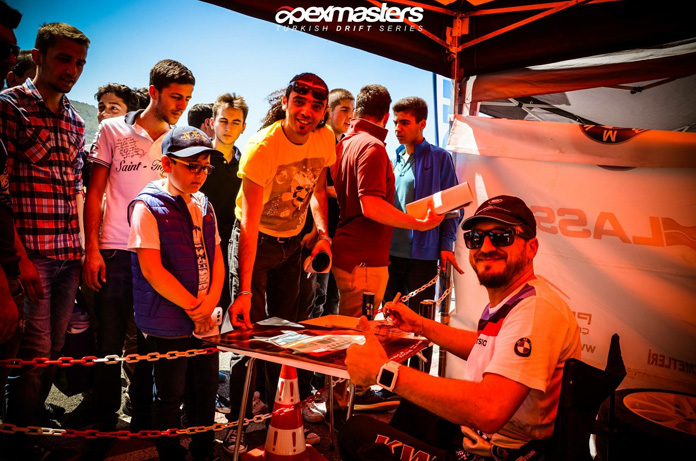
V.A.: Drifting is a sport that was born in Japan in the 1980s. The person who introduced it to Japan, and indeed to the world, was a Japanese driver called Keiichi Tsuchiya. During his rallying days, the reaction of spectators to him sliding through the corners on the stages gave rise to the sport of drifting. He first practised this sport, based on driving cars sideways, on the winding roads of Japan's mountain regions. Many young people became curious about this driving style and also began drifting illegally on mountain corners. Later the movement snowballed and became an official sport. Today it is an official motorsport discipline with its own championships in many countries, led by Japan, America and some European countries, and including Turkey. In our country it began with an indoor drift show organised at CNR Fuarcılık in 2007. With the Drift Akademi founded straight afterwards, more than 500 people have been trained to date. There are currently around 30-40 drivers actively competing in the sport. I'm one of them.
T.M.: How did you start drifting?
V.A.: I've been at it for five years now. In the years when I was presenting the "Otokolik" programme, I met Abdurrahman Özen, the owner of Drift Academy, for a project. After experiencing a few laps of drifting alongside him, I said, this is my sport. Believe me, I dreamed about drifting for three nights in a row. After that, everything followed quickly. I took training straight away. After the training I bought a rear-wheel-drive car to use only for this sport. I've been in drifting ever since, developing both myself and the car.
 T.M.: Could you tell us a little about your car? What are its features?
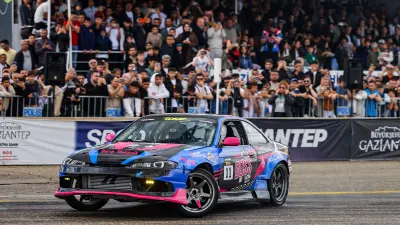
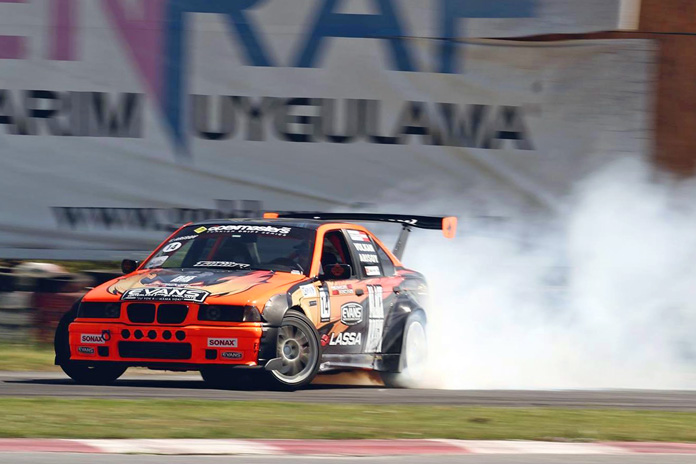
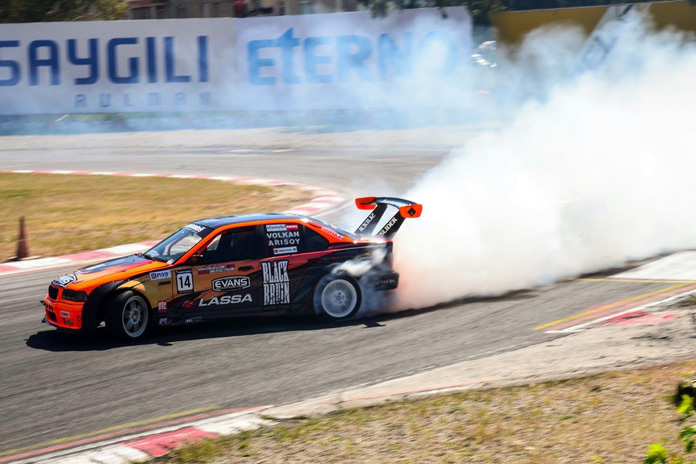
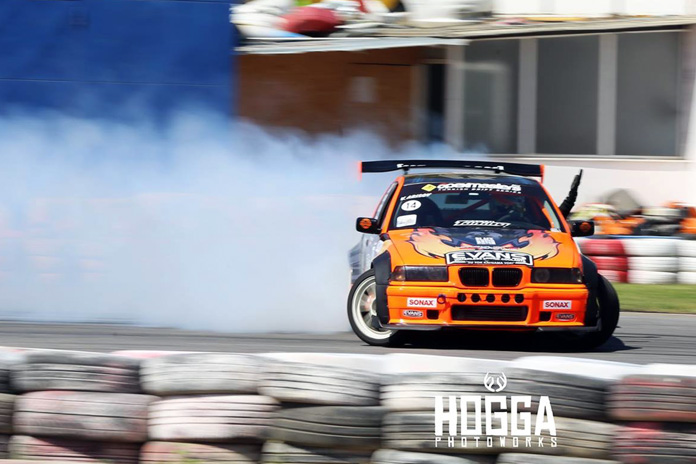
V.A.: My car is a 1991 BMW 325i with the E36 body. It's a completely bespoke build, with a turbocharged engine. It makes more than 500 horsepower and has the underlying structure to withstand 1,000 horsepower. In that respect it's one of the most powerful cars competing in the Turkish Drift Championship. It was prepared entirely professionally by JDM Works and BMW Askar, and in the 2016 season it was developed further with the support of Parkur Racing, one of Turkey's leading racing garages. With Lassa's tyre sponsorship, the high-performance 17- and 18-inch tyres on my car provide superior grip, and thanks to that grip the controlled sliding, which is the most important characteristic of drifting, can be done at higher speeds, making maximum use of the car's power. Let's not forget the safety details too. My car has a purpose-built roll cage (known colloquially as roll bars), special racing seats, six-point harnesses and a fire extinguisher system.
T.M.: It sounds as if you've created the car from scratch.
V.A.: Modifications like these are essential. In the end, to get good results you must strengthen the underlying structure and ensure safety.
T.M.: How are drift events run?
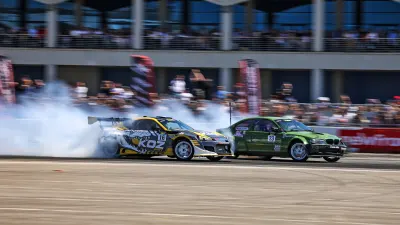
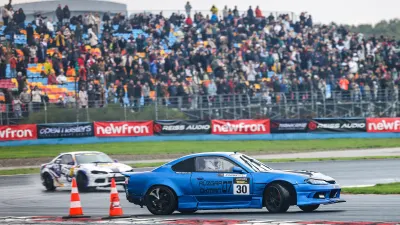
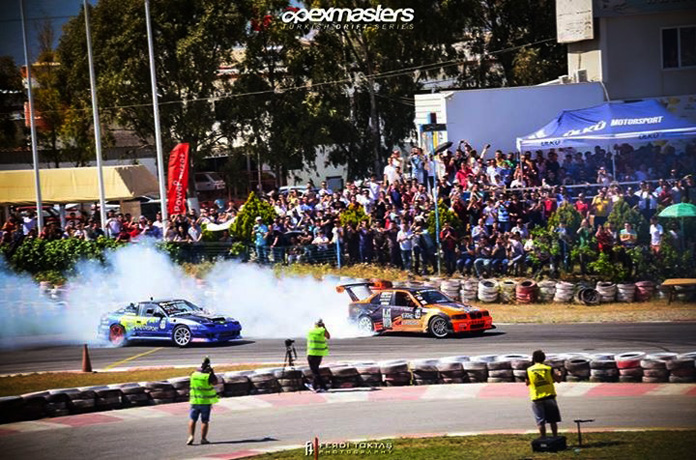
V.A.: First of all, the most important requirement of this sport is a closed, secured track. It doesn't matter where the track is: a car park in a city, the combined corners of a race circuit, or streets closed to traffic with official permission… The cars used are rear-wheel drive, with special safety equipment and 500 horsepower or more. Perhaps the best thing about this sport is that there's no limit to engine power. Depending on your budget, you can build a car from 200 horsepower up to 1,000 horsepower and beyond. "The more smoke, the more performance" is the guiding principle of engine power. Three judges, or rather a panel, take part in the events. They assess the cars' approach speeds, approach angles and approach distances to the points marked out on the track. Car control, the smoke coming off the tyres and the reaction of the crowd are also criteria and count towards the scoring. The battles are run in pairs. While one car leads, the other follows it, mimicking it. Then the lead car drops to the back and follows the other car in the same way. The driver and car with the highest judges' score go through to the next round. In this knockout format, the Top 16, Top 8, Top 4 and Top 3 are determined, depending on the number of entries.
T.M.: Let's turn to the championship. What are your thoughts on the Apex Masters Turkish Drift Championship?
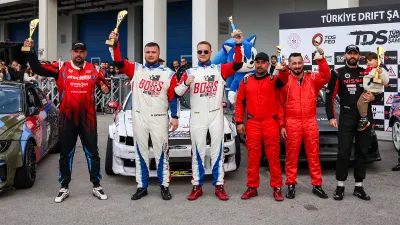
V.A.: Apex Masters was a dream that Abdurrahman Özen, the founder of our club and a major figure in the development of drifting in Turkey, turned into reality. In 2011 he proved he could do it by organising a one-round event, and by leading the spread of this sport he presented this championship to Turkish drift fans. Of course, alongside him, our fellow drivers and friends who are devoted to this sport, who have spared no effort since the very first day and stretched all their material and moral resources to bring it to where it is today, also played a major role in the development of Apex Masters. Today this championship is followed by drift authorities in many countries around the world. I believe foreign drivers will come and take part in this championship in the future. TOSFED's support is also undeniable. The opportunities they have given us, and important steps such as our inclusion, first with local and this year national event status, are enough to motivate us drivers.
T.M.: What is your situation in the championship?
V.A.: Frankly, I'm more ambitious this year than in previous years. My car, "Slider", has come to the settings I wanted. It responds the way I want. Finishing sixth at the Izmir event motivated me a lot. I hope I'll be in the top five in the coming events too. What can I say?
TM: Thank you very much for your time. Finally, is there anything you'd like to share?
V.A.: First of all, I'd like to thank my sponsors who support me: Black Bruin, Lassa, Parkur Racing, Evans Coolents Türkiye, Sonax Türkiye, Akoni Reklam, Power Chip Tuning, Askar Servis, Oto Stil Dergisi, Tufan Türkmen and Paşam Garage. Their support is extremely important to me. I'd also like to thank you endlessly for giving me the chance to introduce myself on these pages. Media support is very, very important in sports like this. Without media support, it's very hard to progress. So finally, through these lines, I'd like to address all our friends who will read this interview, and even big companies: please support the development of sports like these from your advertising budgets. Sometimes the very small sums you set aside from your budget will be a great help in getting many drivers, even young people, noticed. Thank you.
Interview: Ahmed Said ÖZEN